


What you eat every single day either works for your testosterone or against it. There's no neutral ground. This guide walks you through exactly how to use food as a tool for supporting healthy T-levels, from which foods to prioritize to which habits quietly sabotage your hormones.
Step 1: Understand How Food Affects Testosterone
Your testes produce testosterone, but your brain and pituitary gland control how much. Diet doesn't override that system. What it does is give your body the raw materials it needs to produce hormones in the first place.
According to UPMC Health Beat, your body makes testosterone from specific nutrients, particularly fat, protein, and certain vitamins and minerals. Cut those out, and production suffers. Researchers have also found that men who eat a "Western-style" diet, heavy in refined carbs, added sugar, and processed foods, tend to have lower testosterone levels than men who don't.
So food doesn't directly inject testosterone into your bloodstream. It creates the conditions where your body can do that job well. Think of it as clearing the path rather than pushing the car.
Testosterone naturally peaks around age 30, then declines by roughly 1 to 2 percent per year after that. If you're also overweight, sleep-deprived, or chronically stressed, that decline moves faster. Diet won't fix every variable, but it's one you actually control.
The goal isn't one miracle food. It's a consistent pattern of eating that keeps your hormonal environment in good shape. That means adequate fat, adequate protein, the right micronutrients, and as few hormone-disrupting foods as possible.
Step 2: Load Up on These Testosterone-Boosting Foods
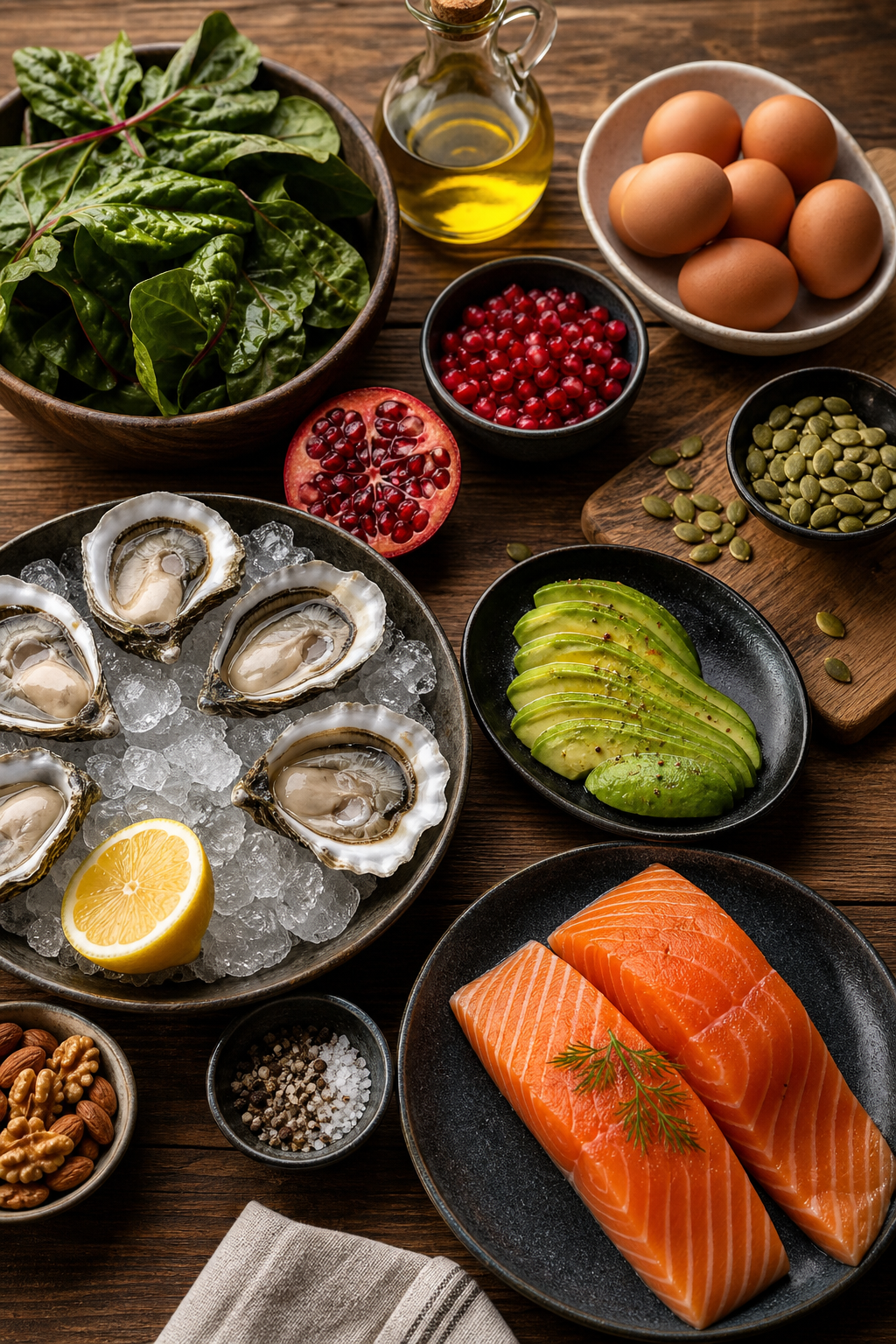
Certain foods come up again and again in the research because they supply the nutrients your body needs most for hormone production. Here's what to actually put on your plate.
Oysters and Zinc-Rich Foods
Oysters contain more zinc per serving than any other food on earth. Zinc is essential for testosterone production. Severe zinc deficiency is directly linked to hypogonadism, where the body fails to produce enough testosterone. Good zinc sources beyond oysters include beef, pumpkin seeds, and crab. Worth knowing: ejaculation causes zinc loss, so men who are sexually active have a higher ongoing need for it.
Fatty Fish and Healthy Fats
Salmon, mackerel, sardines, and tuna are rich in omega-3 fatty acids. These fats support overall dietary fat intake in a way that's good for both heart health and hormones. According to Atlantic Urology Clinics, highly restrictive or extremely low-fat diets may suppress testosterone production. Fat is a precursor to hormone synthesis , cutting it too low is a real problem.
You can read more about which specific fats matter most in our breakdown of the best fats for testosterone, which covers why monounsaturated and saturated fats are particularly important.
Eggs
Whole eggs are one of the most usable testosterone-friendly foods you can eat. The yolk has selenium, which acts as an antioxidant and may support testosterone production. One study found higher testosterone levels in men who consumed whole eggs after resistance training compared to those who only ate egg whites.
Leafy Greens
Spinach, Swiss chard, and kale are high in magnesium. Magnesium deficiency is associated with lower testosterone, and supplementation has been shown to help restore levels when deficiency is the cause. Leafy greens also carry other micronutrients that support overall hormonal balance.
Pomegranate and Onions
A 2012 study found that pomegranate consumption was associated with a 24 percent average increase in salivary testosterone levels, along with improvements in mood and blood pressure. Onions show similar promise. Research published in 2019 found that onion extract can support hormone production and increase antioxidant activity.
Extra-Virgin Olive Oil
Olive oil is rich in monounsaturated fat and vitamin E. A small 2013 study found it may increase serum testosterone levels in healthy adults. It's also a staple of the Mediterranean diet, which research consistently links to better hormone balance and cardiovascular health.
Step 3: Cut Out Foods That Crush Your T-Levels
Knowing what to eat is only half the job. The other half is cutting out what works against you. Some foods are worse than others, and a few are genuinely worth removing almost entirely.
Processed Foods and Trans Fats
One study of 209 men found that those who consumed the highest amounts of trans fats had 15 percent lower testosterone than those who consumed the least. Trans fats are also linked to inflammation and reduced testicular function. The US banned partially hydrogenated oils in 2015, but they can still appear in imported or older processed products, so it's worth checking labels.
Our guide on common testosterone killers goes deeper on processed foods and other lifestyle habits that quietly drain your levels.
Alcohol
Testosterone levels can drop as quickly as 30 minutes after drinking. A 2004 study found that consuming around 2 to 3 standard drinks per day for three weeks decreased testosterone in men by 6.8 percent. Heavy, long-term drinking can cause testicular atrophy and significantly impair hormone production. An occasional drink isn't going to wreck your hormones, but regular heavy use will.
Licorice Root
This one surprises most people. A 2003 study found that 7 grams of licorice root per day caused a 26 percent drop in testosterone after just one week. It's commonly used to sweeten supplements and herbal teas, so it's worth checking ingredients if you use those regularly. This applies to actual licorice root, not licorice-flavored candy, which rarely contains it.
Highly Processed Soy Products
The research here is mixed, and moderate soy intake appears to have little effect. But consuming large amounts of concentrated soy protein, soy milk, and similar products is worth limiting if your testosterone is already low. As noted in our testosterone killers guide, men who consume large amounts of soy tend to have lower levels than those who don't.
Step 4: Structure Your Meals for Hormonal Balance
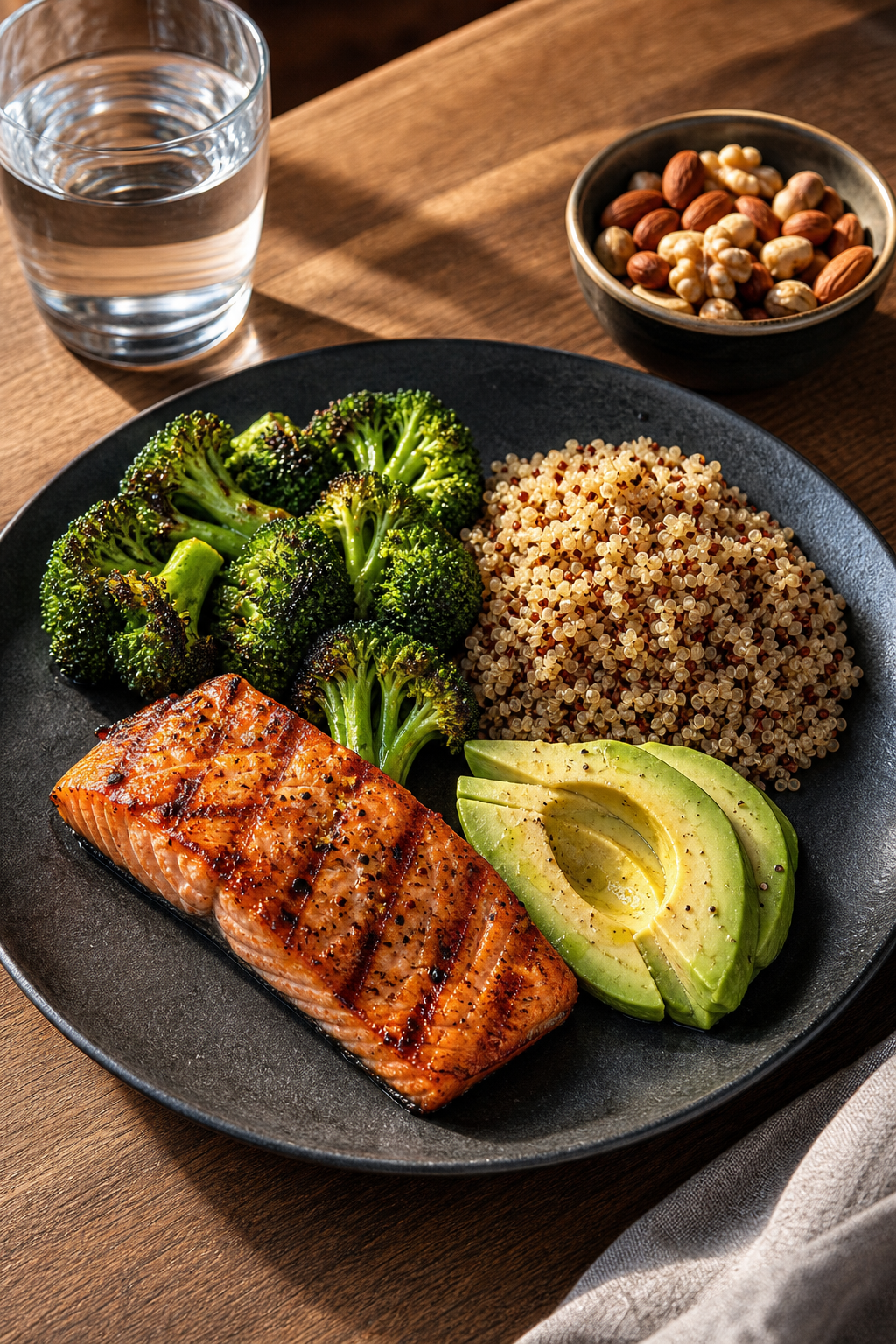
What you eat matters. When and how you structure it matters too. Getting your macronutrient balance right is the foundation everything else sits on.
Hit Your Macros First
Nutrition researcher Alan Aragon recommends not going below 20 percent of daily calories from fat at a bare minimum. Fat is the building block for steroid hormones including testosterone. Below that threshold, production can drop noticeably. Carbohydrates should make up roughly 45 to 60 percent of your intake, ideally from whole grains and vegetables rather than refined sources.
Protein is non-negotiable for maintaining muscle mass and hormone balance. The minimum recommended daily intake is 0.8 grams per kilogram of body weight, though men who train regularly benefit from more. A variety of sources, including lean meats, fish, and legumes, is better than relying on one.
Don't Skip the Micronutrients
Vitamin D, zinc, and magnesium are the three most commonly cited micronutrients in testosterone research. One study found that daily vitamin D supplementation for a full year produced a significant increase in total testosterone in men who started with a deficiency. Vitamin B6 has also been linked to testosterone synthesis , deficiency appears to reduce the rate at which your body produces the hormone.
Meal Timing Around Exercise
A balanced meal containing protein and complex carbohydrates one to two hours before training helps maintain improved testosterone during the session. After training, your body is primed for recovery. A protein and carb-rich meal within 30 to 60 minutes post-workout supports muscle repair and testosterone production. This doesn't need to be complicated , eggs on whole grain toast, or salmon with rice, both work well.
Meal Frequency
There's ongoing debate here. Some research supports five to six smaller meals to keep blood sugar stable. Other studies suggest fewer, larger meals may benefit hormonal responses, especially for those using intermittent fasting. Either approach can work. What matters more is consistency and hitting your macronutrient targets across the day, whichever structure makes that easiest for you.
Confidence in the gym and in life tends to reinforce each other. Men focused on their physical performance often find that appearance and presentation matter too , The Curated Outfit helps men build a wardrobe that reflects who they actually are today, which complements the physical work you're putting in.
Step 5: Fill Nutritional Gaps With the Right Supplement Support
Food comes first. Always. But even with a solid diet, gaps happen. You might not eat enough zinc-rich foods. You might not get enough sun for vitamin D. That's where targeted supplementation makes sense.
Be selective, though. A University of Southern California review of 50 testosterone booster supplements found that only 24.8 percent had published data actually supporting a testosterone increase. Many contained supra-therapeutic doses of vitamins and minerals. The point isn't that supplements don't work , it's that most on the market aren't built around the right ingredients at the right doses.
The nutrients with the strongest research support are zinc, vitamin D3, magnesium, and vitamin B6. These four show up consistently in studies on male hormone health. Zinc is particularly worth flagging because the modern Western diet often doesn't supply enough, and ejaculation causes additional losses that many men never account for.
At Clubhouse Supplements, we built the Clubhouse "Brawn" Formula specifically around these gaps. It contains Zinc Bisglycinate, Vitamin D3, and Vitamin K2 for baseline testosterone support, alongside Tongkat Ali, Turkesterone, and Boron to support free testosterone by lowering SHBG. It also includes DIM and Calcium D-Glucarate for estrogen detoxification support. Every batch is third-party purity tested and manufactured in the USA.
Our Testosterone Boosting Blueprint is worth pairing with any dietary changes , it lays out the full system, not just the supplement side.
One thing to watch: some T-booster products contain ingredients that can negatively affect testosterone. The USC review found 10.1 percent of the supplements they examined had components with data suggesting a negative effect. Read labels carefully and prioritize products that name their specific ingredients and doses rather than hiding behind proprietary blends.
Step 6: Support Your Results With Lifestyle Habits
Diet does a lot of the heavy lifting, but it doesn't work in isolation. Three lifestyle factors have direct, well-documented effects on testosterone.
Resistance Training
Weightlifting raises testosterone in the short term, and consistent resistance training over time supports healthy levels broadly. A 2020 literature review confirmed that resistance training increases testosterone, with the effect varying by intensity. High-intensity interval training (HIIT) also works. Both are worth including if your schedule allows. As Alexander Pastuszak, assistant professor of urology at the University of Utah, has noted, carrying excess weight is a common cause of low testosterone, and exercise is one of the most direct ways to address it.
Sleep
A 2019 study of over 2,000 males found that impaired sleep was linked to lower testosterone levels. Most of your testosterone is produced during deep sleep. Cut sleep short regularly and you cut production short too. Seven to eight hours is the consistent recommendation. If getting there is a struggle, the Clubhouse "Sleep" Formula was designed to support sleep quality, and quality sleep is one of the most direct levers you have for hormonal health.
Stress Management
Cortisol and testosterone work like a seesaw. When cortisol goes up, testosterone tends to come down. Chronic stress keeps cortisol improved and keeps testosterone suppressed. Exercise helps regulate this. So does consistent sleep. Simple breathing practices and limiting stimulant overload (including excessive caffeine) can also make a measurable difference over time.
of evidence-based testosterone strategies, managing stress, getting adequate sleep, and limiting alcohol exposure are among the most consistent lifestyle interventions for supporting healthy T-levels.
FAQ
What foods increase testosterone the fastest?
No single food raises testosterone overnight. But oysters, fatty fish, eggs, and leafy greens are consistently linked to better hormonal conditions because they supply zinc, magnesium, and healthy fats , the raw materials your body needs. A pattern of eating these foods daily produces results over weeks, not hours. Overall lifestyle factors like sleep and stress matter alongside diet.
Can diet alone fix low testosterone?
Diet can meaningfully support healthy testosterone levels, especially if poor nutrition is part of the problem. But if levels are clinically low due to a medical condition or significant hormonal disruption, diet alone may not be enough. A doctor can run bloodwork to determine what's driving the drop and recommend appropriate next steps, which may include dietary changes, lifestyle adjustments, or medical treatment.
Which vitamins and minerals matter most for testosterone?
Zinc, vitamin D3, magnesium, and vitamin B6 have the strongest research support for testosterone production. Zinc deficiency is directly linked to hypogonadism. Vitamin D deficiency is associated with lower T-levels. Magnesium supplementation has been shown to restore levels when deficiency is the cause. Most men don't get enough of these from diet alone, especially vitamin D.
Does alcohol lower testosterone?
Yes. Testosterone can drop within 30 minutes of drinking alcohol. Regular heavy consumption suppresses production over time and can cause testicular atrophy. An occasional drink is unlikely to cause lasting damage, but drinking 2 to 3 standard drinks daily has been shown to reduce testosterone by 6.8 percent over just three weeks in research on healthy men.
How long does it take to see results from dietary changes?
Most men notice meaningful changes in energy, mood, and drive within four to eight weeks of consistent dietary improvement. Testosterone levels respond gradually to sustained nutritional changes rather than short-term fixes. Adding targeted supplementation alongside dietary changes can speed up the process, particularly if you've been deficient in key nutrients like zinc or vitamin D.
Are eggs good or bad for testosterone?
Whole eggs are good for testosterone. The yolk contains selenium, which supports hormone production, and the fat content provides the dietary building blocks your body needs. One study found higher testosterone levels in men who ate whole eggs after resistance training compared to men who only consumed egg whites. Unless you have a specific medical reason to avoid them, eat the whole egg.
Conclusion
The foods you eat create either a good environment for testosterone production or a bad one. Start with the basics: eat more oysters, eggs, fatty fish, and leafy greens; cut back on processed foods and alcohol; and make sure your fat intake isn't too low. If you're covering the dietary side and want to fill the micronutrient gaps that diet often misses, the Clubhouse "Brawn" Formula is where we'd point you first , it's built around the nutrients that actually move the needle, tested, and backed by a 180-day guarantee.


